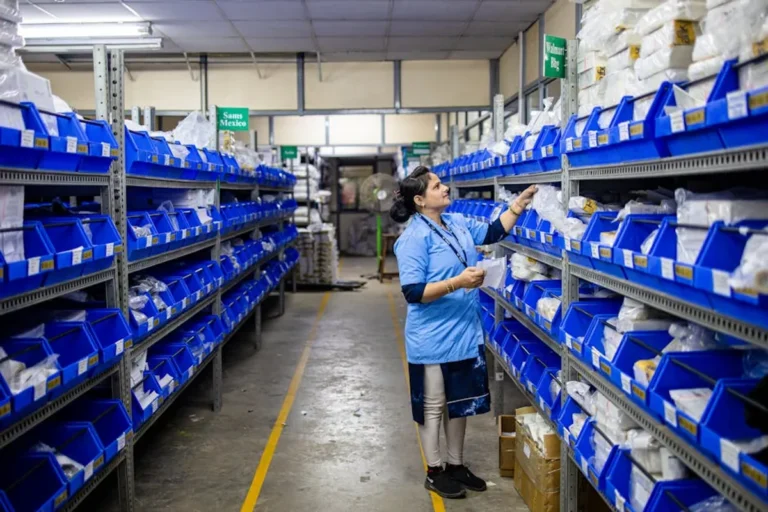

Effective demand forecasting is not merely an analytical exercise; it is a strategic imperative that directly influences a business's operational efficiency, financial health, and customer satisfaction. The ability to accurately predict future product or service demand allows companies to optimize inventory levels, streamline production schedules, allocate resources judiciously, and mitigate risks associated with overstocking or stockouts. Without a robust forecasting methodology, businesses risk incurring significant carrying costs, missing sales opportunities, or failing to meet customer expectations, all of which erode profitability and market position. This guide details the critical components and methodologies necessary to implement a reliable demand forecasting system, enabling more informed decision-making across your enterprise.
Understanding Demand Forecasting Fundamentals
Demand forecasting involves estimating future customer demand over a specified period. This estimation relies on analyzing historical sales data, current market conditions, and anticipated future trends. The core objective is to reduce uncertainty in business planning, allowing for proactive adjustments rather than reactive responses. A well-executed forecast provides the foundation for decisions in procurement, manufacturing, logistics, staffing, and marketing.
Why Accurate Forecasting Is Essential for Commercial Success
The commercial impact of precise demand forecasting is substantial and multifaceted:
- Inventory Optimization: Accurate forecasts prevent both overstocking (which ties up capital, incurs storage costs, and risks obsolescence) and understocking (which leads to lost sales, backorders, and customer dissatisfaction). Optimal inventory levels directly improve cash flow and reduce operational expenses.
- Production Planning Efficiency: Manufacturers can schedule production runs more effectively, ensuring raw materials are available when needed and production capacity is utilized efficiently. This minimizes idle time, reduces overtime costs, and improves delivery reliability.
- Resource Allocation: Beyond inventory and production, forecasting informs staffing levels, capital expenditure planning, and even marketing campaign timing. Knowing when demand will peak or dip allows for strategic allocation of human and financial resources.
- Improved Customer Satisfaction: Meeting customer demand consistently and delivering products on time enhances brand reputation and fosters customer loyalty. Conversely, frequent stockouts can drive customers to competitors.
- Reduced Waste and Spoilage: For perishable goods or products with short shelf lives, accurate forecasting is critical to minimizing waste, directly impacting profitability and sustainability efforts.
Key Data Inputs for Robust Forecasts
The quality of any forecast is directly proportional to the quality and relevance of the data fed into it. Effective demand forecasting requires a comprehensive approach to data collection and preparation:
Internal Data Sources:
- Historical Sales Data: This is the cornerstone. Analyze sales volumes, patterns, seasonality, and trends over several years. Look for daily, weekly, monthly, and quarterly variations.
- Promotional Data: Track the impact of past marketing campaigns, discounts, and special offers on sales volumes. Quantify the uplift generated by each promotion.
- Product Lifecycle Data: Understand the typical lifecycle of your products, including introduction, growth, maturity, and decline phases, as these inherently influence demand.
- Customer Order Data: Analyze order frequency, volume, and customer segments to identify purchasing behaviors.
External Data Sources:
- Economic Indicators: GDP growth, inflation rates, consumer spending indices, and unemployment rates can correlate with overall market demand.
- Market Trends: Industry-specific growth rates, competitive activity, and emerging consumer preferences.
- Seasonal Factors: Holidays, weather patterns, and school calendars can significantly influence demand for certain products.
- Supplier Lead Times: While not demand data, understanding supplier capabilities is crucial for translating forecasts into actionable procurement plans.
Selecting the Appropriate Forecasting Method
Demand forecasting methods generally fall into two categories: quantitative and qualitative. The choice depends on data availability, the product's lifecycle stage, and the required forecast horizon.
Quantitative Forecasting Methods
These methods rely on historical data and mathematical models to predict future demand. They are most effective when substantial historical data exists and market conditions are relatively stable.
Time Series Analysis
Time series models analyze patterns and trends within past data points over time, assuming that historical patterns will repeat.
- Moving Averages: Calculates the average of demand over a specific number of recent periods.
Best for: Products with stable demand and minimal seasonality. Provides smoothing for random fluctuations.
- Exponential Smoothing: Assigns exponentially decreasing weights to older observations. More recent data points are given more weight.
Best for: Products with trends or seasonality where recent data is more indicative of the future. More responsive to changes than simple moving averages.
- ARIMA (AutoRegressive Integrated Moving Average): A sophisticated statistical model that captures complex patterns like trends, seasonality, and cycles in time series data.
Best for: Products with long, stable historical data sets exhibiting clear trends and seasonal patterns. Requires statistical expertise to implement effectively.
Causal Models
Causal models identify relationships between demand and other influencing variables.
- Regression Analysis: Establishes a mathematical relationship between demand (dependent variable) and one or more independent variables (e.g., price, advertising spend, economic indicators).
Best for: Understanding how specific factors drive demand and for forecasting when these factors are predictable. Requires robust data on both demand and the causal variables.
Qualitative Forecasting Methods
These methods rely on expert judgment and subjective opinions, particularly useful when historical data is scarce or unreliable, or when introducing new products.
- Delphi Method: Gathers opinions from a panel of experts through structured questionnaires in multiple rounds, with feedback provided anonymously between rounds to encourage consensus.
Best for: New product launches, technological forecasting, or long-range strategic planning where historical data is non-existent.
- Market Research: Involves surveys, interviews, and focus groups to gauge consumer intentions and preferences.
Best for: Understanding consumer sentiment for new products or assessing the potential impact of market changes.
- Sales Force Composite: Collects sales forecasts from individual salespeople, who are often closest to customer needs and market conditions. These individual forecasts are then aggregated.
Best for: Short-term forecasts and identifying local market nuances. Can be prone to bias if incentives are misaligned.
Pro Tip: Never rely on a single forecasting method in isolation. A hybrid approach, combining quantitative models with qualitative insights, often yields the most accurate and robust predictions. For example, use a time series model for baseline demand and adjust it with expert judgment based on upcoming promotions or market shifts.
Establishing a Continuous Forecasting Process
Demand forecasting is not a one-time event but an ongoing process that requires regular review and adjustment.
- Define Objectives: Clearly state what the forecast will be used for (e.g., inventory management, production scheduling, financial budgeting) and the required accuracy level.
- Select Data Sources: Identify and consistently collect all relevant internal and external data. Ensure data quality and consistency.
- Choose Methods & Models: Select the most appropriate quantitative and qualitative techniques based on your data, product, and forecast horizon.
- Generate Forecasts: Execute the chosen models and compile the initial predictions.
- Review and Adjust: Compare forecasts against actual sales. Analyze forecast errors to understand where discrepancies occurred. Incorporate market intelligence and expert judgment to refine the quantitative output.
- Communicate & Implement: Share forecasts with relevant departments (sales, marketing, production, finance) to ensure alignment and facilitate execution.
- Monitor & Improve: Continuously track forecast accuracy. Regularly evaluate and update models, data sources, and processes to improve future predictions.
Optimizing Your Forecasting Approach
Achieving high forecast accuracy is an iterative journey. Focus on continuous improvement by regularly auditing your data inputs, experimenting with different model parameters, and fostering cross-functional collaboration. Implement a system for tracking forecast error metrics, such as Mean Absolute Deviation (MAD) or Mean Absolute Percentage Error (MAPE), to objectively measure performance and identify areas for refinement. By integrating feedback loops from sales and operations, you can ensure your forecasting models remain responsive to dynamic market conditions and evolving business needs, driving sustained commercial advantage.
Frequently Asked Questions
What is the difference between demand forecasting and demand planning?
Demand forecasting is the process of estimating future demand using analytical methods. Demand planning is a broader process that incorporates demand forecasts into actionable business plans, including inventory planning, production scheduling, and supply chain management, often involving cross-functional collaboration.
How often should demand forecasts be updated?
The frequency of updates depends on industry volatility, product lifecycle, and business needs. For fast-moving consumer goods, weekly or bi-weekly updates might be necessary. For more stable products or longer-term strategic planning, monthly or quarterly updates could suffice. The key is to update frequently enough to capture significant market changes without over-processing.
What are the common pitfalls in demand forecasting?
Common pitfalls include relying on insufficient or poor-quality data, using a single forecasting method for all products, failing to account for external market factors, ignoring qualitative insights, and not regularly measuring and adjusting forecast accuracy. Over-reliance on gut feelings without data validation is also a significant risk.